
Published November 11, 2019
Budgeting To Buy A Home

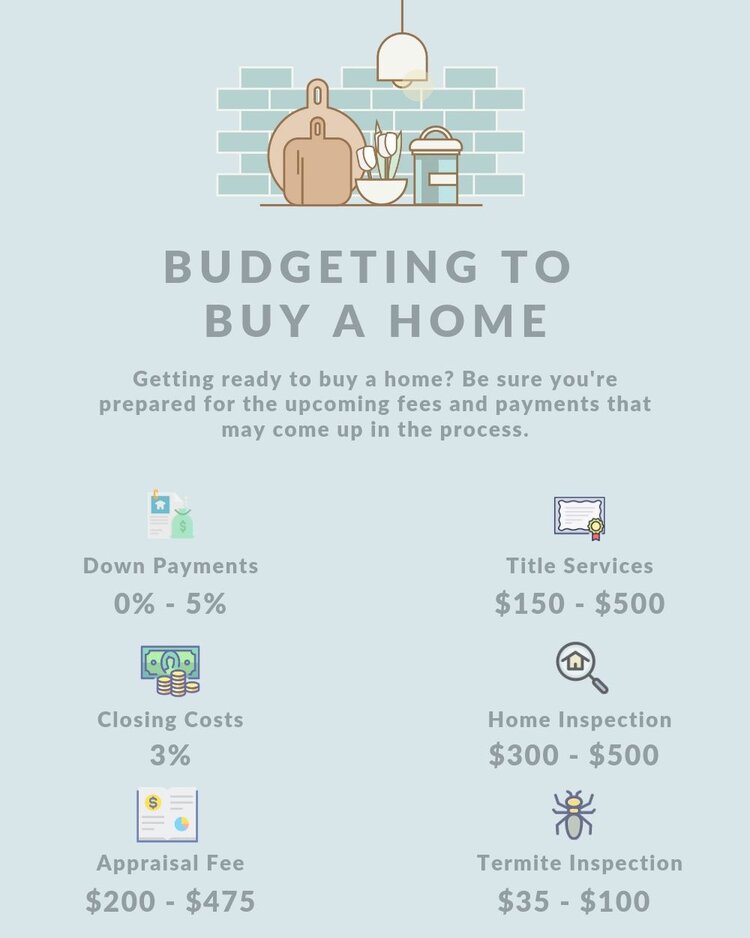
Step 1: Add Up Your Income
You can’t make a budget if you don’t know how much you can spend. So sit down and add up every source of income you receive each month.
Let’s crunch numbers based on a two-earner household. In our example, John brings home two paychecks a month, while his wife Jane receives one.
John’s Paycheck 1 = $1,600
John’s Paycheck 2 = $1,600
Jane’s Paycheck = $2,800
Total Monthly Income = $6,000
Related: Ready to get your savings rolling? With our free 5 day home buying plan, you can learn how to save up $21,000 for your new home in just a year! We’ll give you tips and tricks to save a big down payment fast. Did we mention it was free? Time to turbocharge your savings!
Step 2: List Your Household Expenses
Next, write down every place your dollars go each month.
John and Jane rent a one-bedroom apartment in the heart of town so they can be close to work. A big chunk of their budget goes toward saving for retirement and a down payment on their new home. Here’s how their current budget looks:
John and Jane’s Pre-Home Budget
Charitable Gifts = $600
Savings = $2,200
Rent = $900
Utilities = $300
Food = $400
Clothing = $100
Transportation = $450
Medical = $400
Personal = $450
Recreation = $200
Total Expenses = $6,000
Of course, everybody’s budget is going to be different. We’ve assumed some things in this sample. If some of these categories don’t fit, feel free to make them your own.
Step 3: Calculate Home-Ownership Costs
Dave Ramsey recommends your housing payment, including property taxes and insurance, to be no more than 25% of your take-home income.
To maximize your savings, you should get a 15-year, fixed rate mortgage.
That means the maximum amount John and Jane should spend on their home payment each month is $1,500. Of course, home ownership isn’t limited to a house note. John and Jane make room for expenses like HOA fees, maintenance and repair, furniture and decor, and lawn care in their budget. They also add extra heft to utilities and transportation since they’ll have more square footage and a longer commute in their new home.
John and Jane’s down-payment goal will be complete when they purchase a home, so they reduce the amount they allot to savings.
If you need help figuring out how much house you can afford, we suggest using our mortgage calculator.
John and Jane’s Budget: Changes Made With Home Ownership in Mind
Savings = $2,200 $900
Rent Mortgage = $900 $1,500
Other Housing Expenses = $250
Utilities = $300 $400
Transportation = $450 $550
Total Expenses = $6,000 $5,750
With these adjustments, John and Jane still have money left over—but the budgeting doesn’t stop here.
Step 4: Give Your Budget Room to Grow
Life is going to happen in the years you occupy your home. Before you get married to a mortgage, look ahead and consider events that might increase your living expenses down the road.
John and Jane don’t have children yet but hope to start a family next year. Guess what? Kids cost money! According to the USDA, a middle-income married couple spends an average of $727 a month on non-housing expenses in a child’s first years of life. Depending on what you make or where you live, it could be more, it could be less.
John and Jane build cushion for Junior into their budget by parking an additional $750 into their savings account each month. That puts their savings total at $1,650 and bumps their monthly expenses up to $6,500.
John and Jane’s Budget: Changes Made With Junior in Mind
Savings = $900 $1,650
Total Expenses = $5,750 $6,500
Step 5: Make Adjustments
Right now, John and Jane’s expenses outweigh their income by $500, so they’ve got some balancing to do. John and Jane realize that spending 25% of their income on a mortgage will squeeze out their ability to afford diapers and daycare. So they aim for a more conservative home payment and tighten the purse strings in a few other areas.
John and Jane’s Final Home-Buying Budget
Charitable Gifts = $600
Savings = $1,650
Mortgage = $1,500 $1,250
Other Housing Expenses = $250
Utilities = $400
Food = $400
Clothing = $100 $50
Transportation = $550
Medical = $400
Personal = $450 $400
Recreation = $200 $50
Total Expenses = $6,600 $6,000
When income minus outgo equals zero, your job is done because every dollar has a name.
$6,000 - $6,000 = $0
Success!
That means you can feel confident buying a home that won’t bust your budget. Just keep your mortgage to 25%—or less!—of your monthly income and don’t borrow so much that you can’t breathe if life changes down the road.


